
When you’re driving, you expect your car’s signals to work smoothly. But what if one day you notice your blinker (turn signal) is blinking much faster than usual? This sudden change can be confusing—and it’s easy to ignore, especially if everything else seems fine. However, a fast-blinking turn signal is your car’s way of telling you that something needs attention. Ignoring it could lead to safety issues or even a ticket. Let’s look at why this happens, what it means, and how you can fix it.
What Is A Blinker And How Does It Work?
Before diving into the reasons for fast blinking, it’s important to understand what a blinker does. Also called a turn signal or indicator, the blinker is a small light on the front and back corners of your car. Its main job is to signal to other drivers when you plan to turn or change lanes.
The blinker works through a simple electrical circuit. When you move the turn signal lever, electricity flows to the light bulbs on one side of your car. A part called the flasher relay controls the blinking speed, usually around 60–120 blinks per minute. The relay turns the lights on and off by opening and closing the circuit quickly.
Why Does Your Blinker Start Blinking Fast?
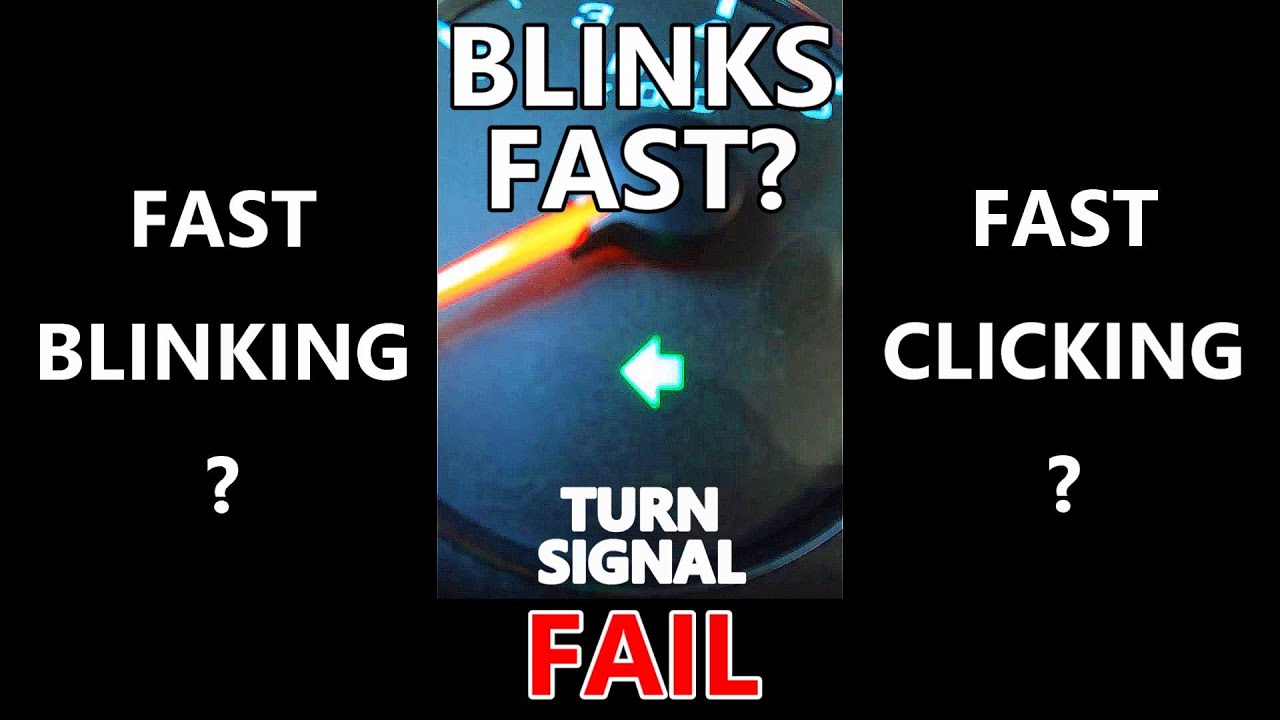
A fast-blinking turn signal almost always signals a problem in the system. Most often, it’s a warning that a bulb on that side (front or rear) has burned out or is not working properly. The car’s relay is designed to blink faster to alert you that something is wrong. Here are the most common reasons for fast-blinking blinkers:
1. Burned-out Bulb
The most common reason is a burned-out bulb. When one of your turn signal bulbs stops working, the electrical resistance in the circuit changes. The flasher relay senses this change and causes the blinker to flash faster. For example, if your left rear turn signal bulb burns out, the left blinker will blink quickly, but the right one will work normally.
2. Loose Or Corroded Bulb Socket
Sometimes, the bulb is still good, but the socket that holds it is loose or corroded. Corrosion (rust or greenish buildup) can block the flow of electricity. A loose connection can cause the bulb to work only sometimes. Both problems can trick the relay into thinking the bulb is burned out, causing fast blinking.
3. Faulty Flasher Relay
Although rare, a faulty flasher relay can also cause unusual blinking speeds. The relay itself may wear out or become damaged over time, especially in older cars. Some relays can fail in a way that causes rapid flashing even if all bulbs are fine.
4. Wiring Problems
Broken wires, damaged connectors, or bad grounds can disrupt the flow of electricity to the bulbs. This can also cause the relay to blink faster. Wiring issues are less common but can be harder to find and fix.
5. Aftermarket Led Bulbs
If you have changed your regular bulbs to LED bulbs without also changing the flasher relay, you might notice fast blinking. LED bulbs use much less power than regular bulbs, so the relay may not “see” them correctly. Special “LED-compatible” relays or load resistors can solve this.
How To Diagnose A Fast-blowing Blinker
If your blinker suddenly speeds up, don’t panic. Here’s a step-by-step process to find the cause:
- Check which side is blinking fast. Turn on each turn signal and see if the problem is on the left, right, or both.
- Look at the bulbs. With the fast-blinking signal turned on, walk around your car. See which bulb is not lighting up (front, rear, or side).
- Inspect the bulb and socket. Remove the bulb that isn’t working. Check for dark spots (a sign the bulb is burned out), broken filaments, or corrosion in the socket.
- Swap bulbs if possible. Put a working bulb from another spot into the problem socket. If it lights up, your old bulb is bad. If not, the socket or wiring may be at fault.
- Check wiring and connections. Wiggle the wires gently. If the light comes on and off, there’s a loose connection.
- Test the relay. If all bulbs and sockets look good, the relay might be bad. Relays are usually cheap and easy to replace.
Comparing Common Causes Of Fast Blinker
It helps to see at a glance how different problems compare. Here’s a quick comparison of the most common causes:
| Cause | How Common | Difficulty to Fix | Cost (Approx.) |
|---|---|---|---|
| Burned-Out Bulb | Very Common | Easy | $3–$10 per bulb |
| Loose/Corroded Socket | Common | Easy–Medium | $0–$20 |
| Faulty Relay | Uncommon | Easy | $10–$30 |
| Wiring Problem | Rare | Medium–Hard | $0–$100+ |
| LED Bulb Issue | Common (if upgraded) | Easy–Medium | $5–$25 |

Credit: www.youtube.com
Why Is Fast Blinking A Warning Signal?
Your car’s electrical system is designed to alert you to problems. When a bulb burns out, the resistance in the circuit drops. The flasher relay “sees” this change and speeds up the blinking. This is an intentional design, so you notice the issue and fix it quickly. If the blinker just stopped working with no warning, you might not realize a bulb was out, which could be dangerous.
Fast blinking is not just a small annoyance. If you ignore it, you may be driving with a signal that does not work. Other drivers might not see your intention to turn or change lanes, making accidents more likely.
Why Is Blinker Speed Important For Safety?
The speed of your blinker is more than just a technical detail. It’s a key part of road safety. Here’s why:
- Standard blinking speed (about 60–120 blinks per minute) is easy for other drivers to see and understand.
- Too fast blinking may confuse other drivers, as it doesn’t match the normal rhythm they expect.
- If a signal is out, drivers behind you may not see your turn, especially in poor weather or at night.
- Traffic laws in most places require working turn signals. Police can ticket drivers with broken or non-working signals.
How To Fix A Fast-blowing Blinker
Most of the time, fixing a fast-blinking blinker is simple. Here’s what to do:
1. Replace The Bulb
This is the most common fix. Find the burned-out bulb and replace it with a new one. Make sure you buy the correct type for your car (check your owner’s manual).
- Tip: Handle new bulbs with a clean cloth. Oil from your fingers can shorten the bulb’s life.
2. Clean Or Replace The Socket
If you see rust or greenish buildup inside the socket, clean it with electrical contact cleaner. If the socket is damaged, you may need to replace it. This is usually easy and cheap.
3. Repair Wiring
If cleaning the socket doesn’t help, look for broken or disconnected wires nearby. A mechanic can fix these if you’re not comfortable with electrical work.
4. Replace The Relay
If all bulbs and sockets are good, the flasher relay might be the problem. Relays are often located under the dashboard or in the fuse box. Swapping in a new relay is usually simple and inexpensive.
5. Install A Led-compatible Relay Or Load Resistor
If you recently switched to LED bulbs, you might need a special relay or load resistor. This makes the car “see” the correct resistance, stopping the fast blinking.
How To Prevent Fast Blinker Problems
You can avoid most blinker problems with regular care:
- Check your lights once a month. Turn on each signal and check all corners of your car.
- Replace bulbs in pairs. If one bulb burns out, the other may fail soon. Changing both can save time.
- Keep sockets dry and clean. Water or dirt in the socket can lead to corrosion.
- Use quality parts. Cheap bulbs or relays may not last long.
Real-world Examples
Let’s look at some real-life situations:
Example 1: Maria noticed her right blinker was blinking twice as fast. She checked her lights and saw the rear bulb was out. After replacing it for $5, the blinking returned to normal.
Example 2: John installed LED turn signal bulbs. Suddenly, both blinkers started flashing fast. After reading his manual, he bought an LED-compatible relay for $15, and the problem was solved.
Example 3: A taxi driver ignored his fast-blinking signal for weeks. One night, a car hit him as he turned, because his rear blinker wasn’t working. He later learned that fast blinking was his only warning.
Key Differences: Standard Vs. Fast Blinker
Here is a quick look at how standard and fast-blinking turn signals compare:
| Type | Blinks Per Minute | What It Means | Action Needed |
|---|---|---|---|
| Standard Blinker | 60–120 | Normal operation | None |
| Fast Blinker | 120–180+ | Possible bulb or circuit problem | Check and fix soon |
What Happens If You Ignore A Fast-blowing Blinker?
Ignoring a fast-blinking turn signal can cause more than a simple inconvenience:
- Legal trouble: Police may stop you and issue a fine for a non-working turn signal.
- Higher risk of accidents: Other drivers may not see your intentions, especially at night.
- Possible electrical damage: If the problem is wiring or the relay, it could cause other electrical problems over time.
It’s always best to fix the issue as soon as you notice it.
Common Myths About Fast Blinkers
A few myths can make car owners confused about what fast blinking means:
- Myth: “It’s just a glitch, it will fix itself.”
*Truth:* Electrical problems rarely fix themselves and can get worse.
- Myth: “Both signals need to fail before it’s a problem.”
*Truth:* Even one non-working signal is a safety risk.
- Myth: “LED bulbs always cause fast blinking.”
*Truth:* LED bulbs only cause this if you don’t also upgrade the relay or add resistors.
When Should You Visit A Mechanic?
Most blinker issues are simple to fix yourself. However, see a professional if:
- You have checked and replaced bulbs, sockets, and relay, but the problem remains.
- You see melted wires or burned plastic near the socket.
- The fast blinking happens sometimes, but not always (could be a deeper wiring issue).
- You are not comfortable working with car electronics.
How Long Does It Take To Fix A Fast-blowing Blinker?
For most people, fixing a fast-blinking blinker takes 10–30 minutes. Here’s a rough time guide:
- Bulb replacement: 5–15 minutes per bulb
- Socket cleaning: 10–20 minutes
- Relay replacement: 5–10 minutes
- Wiring repair: 20–60 minutes (may need a mechanic)
Fast Blinker Laws In The United States
Every US state requires working turn signals, but the rules are not always the same. Some states can fine drivers $50–$150 for a non-working signal. Police may also stop you if your blinker flashes at an unusual speed, as it can be seen as a sign of a problem.
Fast Blinker Vs. Hazard Lights
Some people confuse the two, but hazard lights (all four turn signals blinking at once) and a fast-blinking turn signal are different. Hazard lights use the same bulbs but are controlled by a separate switch. If your hazard lights also blink fast, the problem is likely with the bulbs or relay, not just the turn signal circuit.

Credit: www.reddit.com
Fast Blinker In Modern Cars Vs. Older Cars
Modern cars often use electronic relays instead of older mechanical ones. These electronic relays are more sensitive to changes in resistance, so they can detect bulb problems more quickly. However, this also means that upgrades (like LED bulbs) can cause fast blinking unless you use compatible parts.
Older cars with mechanical relays may not blink fast with a burned-out bulb, or may stop blinking entirely. It’s important to understand your car’s system if you’re troubleshooting.
Cost Comparison: Diy Vs. Mechanic
If you’re considering fixing the problem yourself or hiring a mechanic, here’s a quick cost comparison:
| Repair | DIY Cost | Mechanic Cost |
|---|---|---|
| Bulb Replacement | $3–$10 | $25–$50 |
| Socket Cleaning | $0–$5 | $20–$40 |
| Relay Replacement | $10–$30 | $40–$80 |
| Wiring Repair | $0–$20 (if simple) | $50–$150+ |
If you feel confident, DIY can save money. But if you’re unsure, a mechanic can fix the issue quickly and safely.
Credit: www.youtube.com
Practical Tips Most Beginners Miss
- Check your owner’s manual for the exact bulb type and location of the relay—using the wrong part can cause more problems.
- Test your signals before long trips, especially if you drive at night.
- If your car has a bulb-out warning light, don’t ignore it. Some modern cars may show a dash warning before you notice fast blinking.
- Always turn off the car before changing bulbs to avoid shorts or shocks.
Where To Find More Information
For more details on car lighting systems and safety, the National Highway Traffic Safety Administration (NHTSA) offers reliable resources.
When your blinker starts blinking fast, it’s not just a small problem—it’s your car asking for help. Fixing it quickly keeps you safer and avoids legal trouble. With the right steps, most drivers can solve the problem in minutes and stay safely on the road.
Frequently Asked Questions
Why Does My Turn Signal Blink Fast Only On One Side?
This usually means there is a burned-out bulb or a problem with the socket or wiring on that side. The other side works normally because its circuit is still complete.
Is It Safe To Drive With A Fast-blinking Turn Signal?
It’s not recommended. A fast-blinking signal usually means one of your turn signals is not working, which can be dangerous and illegal. Fix the problem as soon as possible.
Can I Use Any Bulb For My Turn Signal?
No, always use the correct bulb type listed in your owner’s manual. Using the wrong bulb can cause fast blinking or even damage the socket.
Do Hazard Lights Blink Fast If There’s A Problem?
Yes, if one of the bulbs used by the hazard lights is out or there’s a wiring issue, the hazard lights may also blink fast.
Will Fast Blinking Drain My Car Battery?
No, fast blinking itself does not use more power. However, if you leave your turn signals or hazard lights on for a long time with the engine off, it can drain the battery.
By understanding what a fast-blinking blinker means and how to fix it, you can avoid costly mistakes and keep your car safe and legal. Pay attention to your car’s signals—they’re designed to keep you and everyone around you safe.