
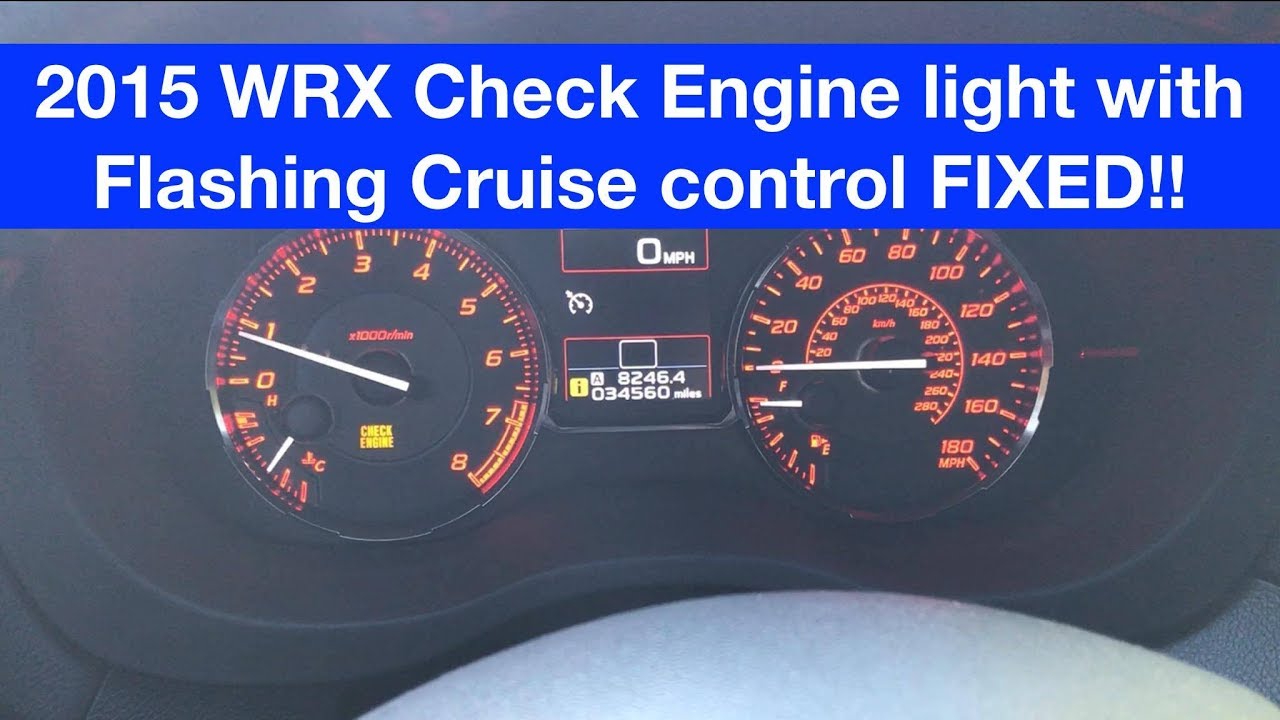
If you own a Subaru and suddenly see the check engine light blinking along with a cruise control light flashing on your dashboard, you’re not alone. Many Subaru drivers experience this confusing warning combination. It’s alarming, especially if your car seems to drive normally—or if it suddenly doesn’t. What do these lights mean? Is your car about to break down? Should you keep driving? This guide explains what’s really happening, why it matters, and how you can fix the problem with confidence.
Understanding The Subaru Check Engine Light And Cruise Control Warning
When both the check engine light and the cruise control light flash, your Subaru is telling you something is wrong. But it’s not always clear what, or how serious it is. Let’s break down each light first.
The check engine light (CEL) is part of your car’s on-board diagnostics system. It turns on when the computer detects a problem in the engine, transmission, or emissions system. A blinking check engine light means the problem is serious and could damage the engine if you keep driving.
The cruise control light works differently. In most Subarus, when the check engine light comes on, the cruise control system is automatically disabled for safety reasons. That’s why the cruise light flashes, even if cruise control was off before. It’s not always a problem with the cruise system itself.
Why Do These Lights Flash Together?
Subaru’s computer programming is designed this way. When the engine detects a fault, it often disables cruise control to prevent extra strain on the engine. This is a safety measure, not a sign that the cruise system is broken. Still, both lights flashing means you should pay attention.
Common Causes For Subaru Check Engine Light Blinking And Cruise Control Flashing
These warning lights can be triggered by many issues, from simple to severe. Understanding the most common causes can help you diagnose your Subaru faster.
1. Misfiring Spark Plug Or Coil
A misfire means one or more cylinders aren’t working right. This is the number one reason for a blinking check engine light. It can be caused by a worn spark plug, a bad ignition coil, or a wiring problem.
2. Loose Or Faulty Gas Cap
If the gas cap is loose, missing, or damaged, it can trigger the check engine light. This is often overlooked but easy to fix.
3. Oxygen Sensor Failure
The oxygen sensor monitors exhaust gases. If it fails, the engine may run too rich or too lean, increasing emissions and reducing fuel economy.
4. Catalytic Converter Problems
A failing catalytic converter can cause engine misfires and trigger both lights. This is a costly repair, but ignoring it can damage your engine further.
5. Mass Air Flow (maf) Sensor Fault
The MAF sensor measures air entering the engine. If it gives bad data, the engine may hesitate, stall, or lose power.
6. Fuel Injector Issues
Clogged or leaking fuel injectors disrupt the air-fuel mixture, causing misfires and warning lights.
7. Vacuum Leaks
Cracked hoses or loose connections can cause air leaks, confusing the engine’s computer and triggering the lights.
8. Transmission Problems
On some Subarus, transmission faults can also set off the check engine light and disable cruise control.
9. Aftermarket Modifications
Poorly installed parts (like remote starters or non-OEM sensors) sometimes cause electrical problems that set off warning lights.
10. Sensor Or Wiring Faults
Damaged wires, loose connectors, or failing sensors often cause intermittent issues that can be hard to track down.
Example: Real Subaru Owner Experiences
Many Subaru forums are filled with stories of these warning lights. For example, one 2014 Outback owner reported both lights flashing after a heavy rain. The cause? Water had entered a spark plug well, causing a misfire. After drying out the plug and replacing a coil, the problem was fixed.
Another driver with a 2011 Forester found that a slightly loose gas cap was the culprit—tightening it and driving for a few days cleared the lights. These examples show how the same warning can have very different causes.

Credit: www.reddit.com
What To Do When Your Subaru’s Check Engine And Cruise Lights Flash
It’s natural to feel anxious when dashboard lights start blinking. Here’s how to respond safely and effectively.
1. Slow Down And Assess
A blinking check engine light means the engine is misfiring, which can cause damage to the catalytic converter or engine if ignored. If the car shakes, loses power, or smells funny, pull over as soon as it’s safe.
2. Check The Gas Cap
Sometimes the fix is simple. Stop the car, open the gas flap, and check if the cap is tight and undamaged. If loose, tighten it until you hear a click. Drive for a few trips—sometimes the light resets itself.
3. Reduce Strain On The Engine
Avoid hard acceleration, high speeds, or towing until you know what’s wrong. Drive gently and keep your trip short.
4. Scan For Trouble Codes
Every Subaru built after 1996 has an OBD-II diagnostic port. Most auto parts stores will scan your car for free and give you the trouble codes. These codes point to the problem area.
5. Decide If It’s Safe To Drive
If the engine runs rough, stalls, or makes new noises, have it towed. If the car drives normally, it’s usually safe to drive a short distance to a mechanic.
6. Don’t Ignore The Lights
Even if the car feels fine, a blinking check engine light means the problem is urgent. Driving too long can turn a minor fix into a major repair.
How Mechanics Diagnose Subaru Check Engine And Cruise Control Warnings
Professional mechanics follow a step-by-step process to track down these problems. Understanding their approach can help you communicate and avoid unnecessary repairs.
Reading The Diagnostic Codes
The mechanic plugs a scan tool into the OBD-II port and reads the stored codes. These codes look like “P0302” (cylinder 2 misfire) or “P0420” (catalytic converter efficiency). They provide a starting point but not always the full answer.
Checking For Common Subaru Issues
Mechanics often check known Subaru trouble spots, such as:
- Spark plug and coil pack condition
- Oil leaks onto sensors or plugs
- Cracked or loose intake hoses
- Sensor wiring and connectors
Testing Suspect Parts
If a code points to a misfire, the mechanic may swap coils or plugs between cylinders to see if the problem moves. This helps pinpoint the faulty part.
Inspecting For Underlying Causes
Sometimes one problem causes another. For example, a failed oxygen sensor can make the engine run poorly, leading to a misfire. A careful mechanic checks both the “cause” and the “effect. ”
Resetting And Road Testing
After repairs, the mechanic clears the codes and test drives the car to see if the warning lights return.
Subaru Model Comparison: How These Lights Behave
Different Subaru models and years handle warning lights in slightly different ways. Here’s a quick look:
| Model/Year | Check Engine Behavior | Cruise Control Light Behavior |
|---|---|---|
| 2010-2014 Outback | Blinks with misfire, steady for minor issues | Flashes when CEL is on |
| 2015-2019 Forester | Blinks for serious, steady for minor | Flashes with CEL, disables cruise |
| 2020+ Ascent | Steady or blinking, depending on issue | May display message, disables cruise |
| Older Legacy (pre-2010) | Blinks for major, steady otherwise | May not flash, but cruise disabled |
Most modern Subarus will flash both lights together for engine misfires or serious faults, but the exact pattern can vary.
Diy Troubleshooting: Simple Checks Before Visiting A Mechanic
While many problems require a professional, some checks can be done at home. Here’s how you can narrow things down.
Visual Inspection
Open the hood and look for obvious issues:
- Loose or disconnected hoses
- Oil or water around spark plug wells
- Frayed or chewed wires (rodents sometimes bite them)
- Cracked vacuum lines
Listen And Smell
A misfiring engine may sound rough, hesitate, or even “pop. ” If you smell raw fuel or rotten eggs, it may be an emissions issue.
Use An Obd-ii Scanner
Basic code readers are affordable and easy to use. Plug one in, follow the instructions, and note any codes. Even if you don’t fix it yourself, having the code helps the mechanic.
Compare With Symptoms
If your Subaru drives normally, the problem may be minor. If it shakes, stalls, or struggles to accelerate, the issue is more urgent.
Credit: www.youtube.com
Real-world Repair Costs And Fixes
How much will this cost to fix? It depends on the exact cause. Here are some typical repair examples:
| Problem | Repair Needed | Estimated Cost (USD) |
|---|---|---|
| Loose Gas Cap | Tighten or replace cap | $0 – $30 |
| Bad Spark Plug or Coil | Replace plug/coil | $100 – $300 |
| Oxygen Sensor Failure | Replace sensor | $150 – $400 |
| Catalytic Converter | Replace converter | $1,000 – $2,500 |
| MAF Sensor Fault | Clean or replace sensor | $80 – $350 |
Simple problems like a loose gas cap cost almost nothing. More serious issues, like a catalytic converter replacement, can be expensive. Always get a written estimate before approving major repairs.
Preventing Check Engine And Cruise Control Light Problems In Your Subaru
Prevention is often cheaper than repair. Here’s how to reduce your chances of seeing these warning lights:
- Regular Maintenance: Change spark plugs, air filters, and fluids as recommended in your owner’s manual.
- Use Quality Parts: Cheap or incorrect parts can cause new problems. Stick with reputable brands.
- Check for Leaks: Oil or coolant leaks can damage sensors and wiring.
- Avoid Aftermarket Modifications: Unless you know what you’re doing, aftermarket electronics can confuse your Subaru’s computer.
- Fix Small Problems Early: If you notice rough running, poor fuel economy, or a minor warning light, address it early to avoid bigger issues.
Non-obvious Insights
Many Subaru owners miss these details:
- Battery Voltage Can Cause False Warnings: Weak batteries or bad alternators can cause false trouble codes. Always check your battery’s health if warning lights appear after jump-starting or in cold weather.
- Subaru-Specific Software Updates: Sometimes, a Subaru dealer can fix recurring warning lights with a software update (reflash) for the engine computer. This is especially true for newer models.
When To Visit A Subaru Dealer Vs. Independent Mechanic
Not all repair shops are equal. Here’s a quick comparison:
| Service Center Type | Pros | Cons |
|---|---|---|
| Subaru Dealer | Access to latest updates, Subaru-trained techs, OEM parts | Often more expensive, longer wait times |
| Independent Mechanic | Lower cost, flexible scheduling | May lack Subaru-specific tools, less experience with certain models |
If your Subaru is under warranty, or if you suspect a rare or complex issue, a dealer is usually best. For common repairs (like spark plugs), a trusted local mechanic is a good option.
The Role Of Subaru Diagnostic Software
Subaru uses Subaru Select Monitor (SSM) software to read deeper trouble codes and data than generic scanners. This dealer-only tool can:
- Read “pending” codes before the check engine light comes on
- Reset adaptive memory and relearn idle
- Update the car’s computer software
Some independent shops have access to SSM or similar tools, but not all. If your problem is unusual or keeps coming back, dealer-level diagnostics may be necessary.

Credit: www.reddit.com
The Risks Of Ignoring A Blinking Check Engine Light
It’s tempting to keep driving if your Subaru still feels fine. But ignoring a blinking check engine light can cause:
- Catalytic converter failure: Costly to replace, required for emissions
- Engine damage: Misfires can damage pistons, valves, or sensors
- Increased fuel use: A misfiring engine burns more gas
- Failed emissions tests: Can prevent registration renewal in some states
Even if the car drives okay, the risk (and cost) rises the longer you wait.
Is It Safe To Drive With These Warning Lights?
Short answer: It depends. If the light is steady and the car runs normally, it’s usually safe to drive to a shop. If the light is blinking, the engine is misfiring and you risk severe damage. Drive only a short distance, gently, and avoid highways or heavy traffic.
If you notice:
- Strong fuel smell
- Engine shaking or loss of power
- Unusual noises
Stop and call for a tow. It’s better to pay for a tow than a new engine.
Frequently Asked Questions
Why Does My Subaru’s Cruise Control Light Flash With The Check Engine Light?
Subaru’s computer disables cruise control whenever there’s a fault in the engine or emissions system. The flashing cruise control light is not a separate problem—it’s a warning that cruise control is off until the main issue is fixed.
Can A Loose Gas Cap Really Cause Both Lights To Come On?
Yes, a loose or missing gas cap is a common cause. It creates a leak in the evaporative emissions system, triggering the check engine light and disabling cruise control as a precaution.
How Long Will It Take For The Lights To Reset After Fixing The Problem?
After the underlying issue is fixed, the lights may turn off immediately (if codes are cleared) or after a few driving cycles. Sometimes, you need to drive 50–100 miles before the computer confirms the problem is gone.
Is It Safe To Use A Generic Code Reader On A Subaru?
Yes, a basic OBD-II scanner will read most codes and is safe to use. However, some Subaru-specific codes or data may require a dealer’s scanner for full diagnosis.
Where Can I Find More Information On Subaru Warning Lights?
You can check your owner’s manual or visit the official Subaru dashboard lights guide for more details.
Final Thoughts
If your Subaru’s check engine light is blinking and the cruise control light is flashing, don’t panic. These warnings are your car’s way of protecting itself. Address the issue soon, get a proper diagnosis, and your Subaru will be back to reliable service in no time. Pay attention to your car’s signals, and you’ll avoid costly surprises down the road.