
When you’re driving a Honda Accord and suddenly see the blinking D light on your dashboard, it’s hard not to worry. This light is more than just a symbol—it’s your car’s way of telling you something needs attention. Many drivers don’t know what this warning means or what to do next. Ignoring it can lead to bigger problems and expensive repairs. Understanding what causes the blinking D light, how to diagnose the issue, and how to fix it can save you time, money, and stress.
This article breaks down everything you need to know about the Honda Accord blinking D light. You’ll learn the most common causes, how to troubleshoot, repair options, and tips for preventing future problems. Whether you drive an older Accord or a newer model, this guide will help you stay confident when a warning light appears.
What Does The Blinking D Light Mean In A Honda Accord?
The blinking D light on your Honda Accord’s dashboard usually relates to the automatic transmission system. The “D” stands for “Drive.” When this light flashes, it’s your car’s way of warning that something is wrong—often with the transmission or its related systems.
Most drivers first notice the blinking D light when they shift into Drive. Sometimes, the car may drive normally at first, but other times you might experience strange symptoms like rough shifting, slipping gears, or hesitation. The blinking light is the car’s request for attention—it’s not just a simple reminder.
Why Is This Warning Important?
The transmission is one of the most complex and expensive parts of your car. Catching problems early can prevent further damage. The blinking D light is similar to the “Check Engine” light, but it’s focused on the transmission.
If you ignore this warning, you may risk:
- Costly transmission repairs or even complete failure
- Sudden loss of power or shifting ability
- Reduced safety while driving
- Lower resale value if the problem gets worse
Common Causes Of A Blinking D Light
There are several reasons why your Honda Accord’s D light might start blinking. Knowing these causes helps you troubleshoot and communicate better with mechanics.
1. Transmission Fluid Issues
Low or dirty transmission fluid is the most common cause. Transmission fluid cools, lubricates, and powers the transmission. If the fluid level is low or the fluid is old and dirty, the transmission can’t work properly.
Symptoms:
- Delayed or rough shifting
- Transmission overheating
- Burning smell
2. Faulty Transmission Solenoids
The transmission solenoids control the flow of fluid in the transmission. If a solenoid fails, the car can’t change gears smoothly or at the right time.
Symptoms:
- Hard or missed shifts
- Car stuck in a single gear
- Trouble codes stored in the computer
3. Transmission Control Module (tcm) Failure
The TCM is the “brain” of the transmission. It controls when and how the gears shift. If it malfunctions, the blinking D light usually appears.
Symptoms:
- Random or erratic shifting
- Car won’t go into gear
- Multiple warning lights
4. Wiring Or Sensor Problems
Modern transmissions rely on several sensors and wiring connections. If a transmission speed sensor or wiring harness is damaged, the system may send a warning.
Symptoms:
- Inconsistent speed readings
- Loss of cruise control
- Other electrical issues
5. Mechanical Transmission Damage
Broken internal parts—like clutches or gears—can cause the blinking D light. This is less common but much more serious.
Symptoms:
- Grinding noises
- No movement in Drive or Reverse
- Metal shavings in transmission fluid
6. Computer Codes And Software Issues
Sometimes, the car’s computer might simply need a software update or reset. This is more common in newer Honda Accords.
Symptoms:
- Light comes on after a battery change or jump-start
- No other symptoms
7. Overheating Transmission
If you drive in hot weather, tow heavy loads, or climb steep hills, the transmission can overheat. The car will often blink the D light to warn you.
Symptoms:
- D light blinks after hard driving
- Transmission feels “sluggish”
- Warning disappears after cooling down
How To Diagnose The Blinking D Light
You don’t need to guess what’s wrong. There are clear steps you can take to understand the problem.
Step 1: Scan For Trouble Codes
The first step is to read the error codes stored in your car’s computer. You’ll need an OBD-II scanner (available at auto parts stores or online). Many auto parts shops will scan your car for free.
- Plug the scanner into the OBD-II port under the dashboard
- Turn the ignition to ON (engine off)
- Read and write down the codes
Common codes related to the blinking D light include:
- P0700 (Transmission Control System Malfunction)
- P0753, P0758 (Shift Solenoid Issues)
- P0715 (Input/Turbine Speed Sensor Circuit Malfunction)
Step 2: Check Transmission Fluid
Always check the transmission fluid level and condition:
- Park on a level surface, engine running, transmission in Park.
- Pull out the transmission dipstick, wipe it clean, and reinsert fully.
- Remove again and check the fluid level and color.
Healthy fluid should be pinkish-red and clear. If it’s dark, smells burnt, or looks dirty, it needs changing.
Step 3: Inspect Wiring And Connections
Look for loose, corroded, or damaged wires around the transmission. Rodents can sometimes chew wires, especially if the car is parked outside.
Step 4: Test Transmission Solenoids And Sensors
If you have the right tools, you can test the resistance of solenoids and sensors. Otherwise, a mechanic can do this quickly.
Step 5: Evaluate Driving Symptoms
Pay attention to:
- When the blinking starts (after warm-up, when cold, etc.)
- How the car shifts (smooth, hard, delayed)
- Any noises or vibrations
Sharing these details helps your mechanic find the issue faster.
Honda Accord Models Most Affected
Not every Honda Accord is equally likely to have this problem. Some model years are more prone to transmission issues.
Here’s a comparison of affected generations and years:
| Generation | Model Years | Transmission Type | Known Issues |
|---|---|---|---|
| 6th Gen | 1998–2002 | 4-speed Auto | High failure rate, D light blinking common |
| 7th Gen | 2003–2007 | 5-speed Auto | Solenoid and TCM issues |
| 8th Gen | 2008–2012 | 5/6-speed Auto | Sensor, wiring problems |
| 9th Gen | 2013–2017 | CVT/6-speed Auto | Software glitches, rare hardware faults |
Insight: Older models (especially 1998–2004) are more likely to have major transmission failures. Newer Accords tend to have more electronic or sensor-related causes for the blinking D light.
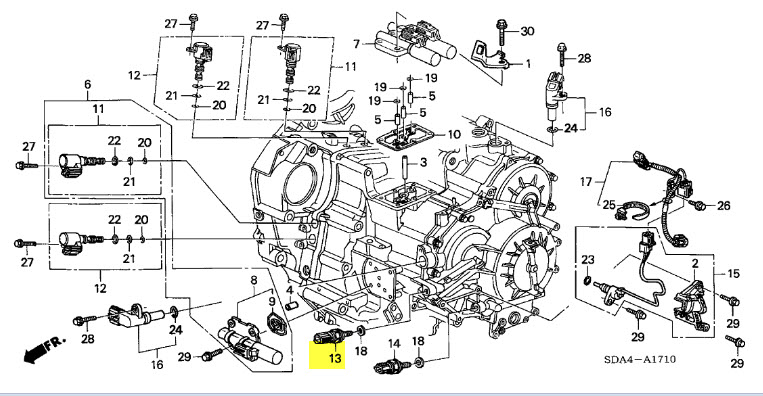
Credit: www.hondaaccordforum.com
Fixing The Blinking D Light: Step-by-step Solutions
The right fix depends on the diagnosis. Here’s how to address the most common causes:
Transmission Fluid Service
If the fluid is low or dirty:
- Top off with Honda-approved ATF if low (never mix brands).
- Drain and refill the fluid if dirty (usually every 30,000–60,000 miles).
- For severe contamination, consider a transmission flush (only if recommended).
A fluid service can often make the blinking D light disappear—especially if caught early.
Replacing Transmission Solenoids
If the scanner shows a solenoid code:
- Locate the faulty solenoid (usually on the outside of the transmission).
- Disconnect the battery.
- Remove the old solenoid and install the new one.
- Reconnect wiring and clear codes with the scanner.
Pro tip: Replace the transmission filter and gasket while you’re at it.
Resetting Or Reprogramming The Tcm
For TCM issues:
- Some problems need only a reset (disconnect battery for 10 minutes).
- Others need a software update or reprogramming at a Honda dealer.
Repairing Wiring And Sensors
If you find damaged wiring or a bad sensor:
- Repair or replace the affected wire or sensor.
- Use electrical cleaner and dielectric grease on connections.
- Clear codes and test drive.
Addressing Major Mechanical Issues
If there’s internal damage (no movement, loud noises):
- The transmission may need to be rebuilt or replaced.
- This is expensive—often $2,500 to $4,500.
- A used or rebuilt transmission can save money, but always check the warranty.
Dealing With Overheating
If the transmission overheats:
- Check for a blocked radiator or cooler lines.
- Never tow heavy loads with a weak transmission.
- Add an aftermarket transmission cooler if you drive in hot climates.
Cost Of Repair: What Should You Expect?
Repair costs for a blinking D light in the Honda Accord vary widely. Here’s a breakdown:
| Cause | DIY Cost | Shop/Labor Cost | Notes |
|---|---|---|---|
| Fluid Change | $40–$100 | $120–$200 | Cheapest, often fixes minor issues |
| Solenoid Replacement | $60–$200 | $250–$400 | Depends on solenoid location |
| Sensor Replacement | $30–$80 | $150–$300 | Usually a quick fix |
| Wiring Repair | $10–$50 | $100–$300 | Simple if caught early |
| TCM Replacement/Programming | N/A | $400–$800 | Dealer-only for some models |
| Transmission Rebuild | N/A | $2,500–$4,500 | Last resort |
Non-obvious tip: The cost to fix a blinking D light is often much lower if you catch it early. Many drivers wait too long, turning a $100 repair into a $4,000 replacement.
Can You Drive With The Blinking D Light On?
It’s possible to drive with the blinking D light, but it’s risky. If the car still shifts and drives, you may not be in immediate danger. However:
- The car may enter “limp mode” (reduced power) to protect itself
- You could be stranded if the transmission fails suddenly
- Continuing to drive can cause more damage
If the car feels unsafe, makes loud noises, or won’t shift, stop driving and get it towed.
Insider advice: Even if the car drives fine, a blinking D light means “don’t ignore me.” Fix small problems before they become big ones.
How To Prevent The Blinking D Light
Prevention is cheaper and easier than repair. Here’s how to keep your Accord’s transmission healthy:
- Change transmission fluid every 30,000–60,000 miles (check your owner’s manual).
- Check fluid level regularly, especially if you see leaks.
- Use only Honda-approved ATF—never mix brands.
- Fix any leaks immediately.
- Avoid harsh driving—don’t “floor it” or shift aggressively.
- If you tow or drive in hot weather, install a transmission cooler.
- Have the transmission computer checked for updates during regular service.
Hidden risk: Many transmission problems start with small leaks or dirty fluid. Early detection is key.

Credit: www.youtube.com
When To See A Mechanic
Some blinking D light issues are DIY-friendly—like fluid changes or sensor swaps. However, seek professional help if:
- The car won’t move or shifts very hard
- You hear grinding, clunking, or whirring noises
- The blinking light comes with other warnings (Check Engine, ABS, etc.)
- You see metal flakes in the fluid
A good mechanic will run diagnostics, check wiring, and advise on repair vs. replacement.
Blinking D Light Vs. Other Dashboard Warnings
It’s easy to confuse the blinking D light with other transmission or engine warnings. Here’s a quick comparison:
| Warning Light | Meaning | Action Needed |
|---|---|---|
| Blinking D Light | Transmission problem detected | Check fluid, scan for codes, fix ASAP |
| Check Engine Light | General engine/trans issue | Scan for codes, may overlap with D light |
| S (Sport) or D3/D4 Light | Mode selected or fault | Check selector switch, scan codes |
| Transmission Temp | Overheating transmission | Stop driving, allow to cool, check fluid |
Pro insight: Multiple warning lights appearing together often signal an electrical or sensor issue, not just a fluid or mechanical problem.
Real-world Example: 2004 Honda Accord
A driver of a 2004 Honda Accord noticed the D light blinking after a long highway drive. The car shifted hard but kept moving. A scan showed a P0753 code—shift solenoid A malfunction. The owner changed the fluid, but the problem returned. Finally, replacing the solenoid fixed the issue, and the light went away.
Lesson: Fluid changes can sometimes help, but if the light returns, further repairs are needed.
What Beginners Often Miss
- Transmission fluid is not “lifetime.” Many owners believe the fluid never needs changing. In reality, dirty fluid is a top cause of transmission failure.
- Ignoring the blinking D light is expensive. Even if the car drives fine, hidden damage grows over time.
- Battery changes can trigger warning lights. After a battery swap, some Hondas need a computer reset to clear false warnings.

Credit: www.driveaccord.net
Where To Learn More
If you want to dig deeper into Honda transmission issues, the official Honda Owner’s Site offers service bulletins and recalls for specific model years.
Frequently Asked Questions
Why Is My Honda Accord D Light Blinking After A Battery Change?
Sometimes, a battery replacement or jump-start can confuse the car’s computers. The transmission module may lose its memory and trigger false warnings. Try disconnecting the battery for 10 minutes, then reconnecting. If the light stays on, scan for codes—there may be a real problem.
Does A Blinking D Light Mean My Transmission Is Ruined?
Not always. Many times, the cause is minor—like low fluid or a bad sensor. However, if you notice loud noises, no movement, or metal in the fluid, the transmission may need major repairs. Early action can prevent full failure.
How Long Can I Drive With The Blinking D Light?
It’s best to limit driving. Short trips to a mechanic are okay if the car shifts normally. If you notice hard shifts, slipping, or other problems, stop driving and get help. The longer you drive, the higher the risk of major damage.
Will A Simple Fluid Change Fix The Blinking D Light?
It can—especially if the fluid is low or dirty. Many blinking D light problems are caused by poor maintenance. However, if the light returns after a fluid change, there may be a deeper problem needing repair.
Can I Use Universal Transmission Fluid In My Honda Accord?
No. Honda automatic transmissions are sensitive. Always use Honda Genuine ATF or a fluid that specifically says it meets Honda’s standards. Using the wrong fluid can cause more problems and may void your warranty.
If you spot the blinking D light in your Honda Accord, don’t panic—but don’t ignore it. Quick diagnosis and simple repairs often keep your car running smoothly for years to come. With the right care, your Accord’s transmission can last well beyond 200,000 miles.