
Many people have experienced an uncontrollable urge to blink their eyes rapidly at some point. For some, this eye blinking happens again and again, sometimes making them feel embarrassed or worried. This repeated, involuntary movement is called a tic, and when it involves the eyes, it’s known as an eye blinking tic. While it may seem simple, tics can be confusing, misunderstood, and sometimes distressing for both the person and those around them.
This article will explore what eye blinking tics are, why they happen, how to recognize them, and what can be done to manage or treat them. You will also learn about common mistakes people make when dealing with tics, how to support someone with this condition, and when to seek professional help. The goal is to give you clear, practical information that helps you or your loved one feel more confident about handling eye blinking tics.
What Is An Eye Blinking Tic?
An eye blinking tic is a sudden, fast, and repeated movement of the eyelids. This movement is not done on purpose and can be hard or impossible to control. Tics can appear in children or adults, but they are most common in childhood.
Eye blinking tics are a type of motor tic. Motor tics involve body movements, while vocal tics involve sounds or words. Tics can be simple (like a quick blink) or complex (involving several movements at once).
Difference From Normal Blinking
Everyone blinks to keep their eyes moist and clean. The average person blinks about 15-20 times per minute. This normal blinking happens smoothly and regularly. But with an eye blinking tic, the blinking is much more frequent, rapid, and sometimes harder or more forceful. It often happens in bursts and can draw attention from others.
How Common Are Eye Blinking Tics?
Tics are actually quite common in children. Studies suggest that up to 20% of school-age children may develop a tic at some point. The most frequent motor tic is eye blinking. Most children outgrow their tics, but for some, the tics stay or become part of a chronic condition.
Causes Of Eye Blinking Tics
Understanding what causes eye blinking tics is important for finding the right support and solutions. The exact cause is not always clear, but researchers believe it is a mix of genetic, environmental, and psychological factors.
1. Genetic Factors
Tics often run in families. If a parent or sibling has a history of tics or related conditions like Tourette syndrome, a child is more likely to develop them. However, having the genes does not always mean a person will have tics.
2. Brain Chemistry And Structure
Research shows that differences in certain brain chemicals, especially dopamine, may play a role in tics. The parts of the brain that control movement and habits might work a bit differently in people with tics. This is why some medicines that change dopamine levels can help reduce tics.
3. Environmental Triggers
Certain events or changes can trigger or worsen tics, especially in children who are already at risk. Common triggers include:
- Stress or anxiety
- Excitement or fatigue
- Illness or infection (like strep throat, in rare cases)
- Changes in routine (moving, new school, etc.)
4. Psychological Factors
Emotional states can make tics worse. Being nervous, stressed, or excited often makes tics more noticeable. On the other hand, relaxing activities or sleep usually make tics better.
5. Other Medical Causes
Sometimes, frequent blinking is not a tic but is caused by other problems such as:
- Dry eyes
- Eye infections or allergies
- Vision problems
- Medication side effects
A careful check-up is needed to rule out these causes if the blinking is new or unusual.
Types Of Eye Blinking Tics
Not all eye blinking tics look the same. They can appear in different ways depending on the person, age, and other factors.
Simple Motor Tics
These involve only one group of muscles and are quick and brief. Examples:
- Rapid blinking of both eyes
- Hard closing of the eyelids
- Twitching around the eyes
Complex Motor Tics
These involve more than one muscle group or a sequence of movements. Examples:
- Blinking and turning the head at the same time
- Blinking with facial grimacing
- Blinking followed by shoulder shrugging
Chronic Vs. Transient Tics
- Transient tics last less than one year and usually go away on their own.
- Chronic tics last more than one year and may need ongoing support or treatment.
Tic Disorders
Some people have only tics, while others have tic disorders. The main types are:
- Provisional tic disorder: Tics last less than one year.
- Chronic tic disorder: Tics last more than one year.
- Tourette syndrome: Both motor and vocal tics are present for over one year.
Symptoms And How To Recognize Eye Blinking Tics
Recognizing an eye blinking tic can be tricky, especially for parents or teachers seeing it for the first time. Here are some signs to help you tell if the blinking is a tic:
- Sudden, quick, and repeated blinking that happens many times in a row
- Happens more during stress or excitement
- Can be stopped for a short time if the person tries, but often comes back stronger
- No pain or vision loss (if the eyes are healthy)
- May be accompanied by other tics (sniffing, throat clearing, etc.)
Some people feel a “premonitory urge”—a feeling that builds up before the tic and goes away after blinking. This is common in older children and adults.
Eye Blinking Tics Vs. Other Eye Problems
It’s important to tell the difference between tics and other eye issues. Blinking caused by dry eyes, allergies, or infection is usually less sudden, and the eyes may be red, watery, or itchy. Tics usually do not cause these symptoms.
How Eye Blinking Tics Affect Daily Life
For many people, eye blinking tics are mild and do not cause serious problems. However, for others, they can affect school, work, and social life. Here’s how:
Social Challenges
- People may stare, ask questions, or make fun of the person with tics.
- The person may feel embarrassed or try to hide the tics.
- Some avoid social situations to escape attention.
School And Learning
- Frequent blinking can make it hard to focus on reading or writing.
- Teachers may mistake tics for misbehavior or distraction.
- Some children may need extra support or understanding.
Emotional Impact
- Feeling different or left out
- Worrying about what others think
- Getting frustrated when tics get worse under stress
Physical Effects
- Tired or sore eyelids from frequent blinking
- Rarely, trouble seeing if blinking is very severe
When To Worry: Red Flags That Need Medical Attention
Most eye blinking tics are harmless and go away on their own. However, sometimes blinking may signal a more serious problem. Contact a doctor if:
- The blinking started suddenly and is severe
- There is eye pain, redness, or vision changes
- Other strange movements or behaviors appear
- Tics last more than a year or get worse over time
- School or social life is seriously affected
A doctor can check for other causes and decide if specialist care is needed.
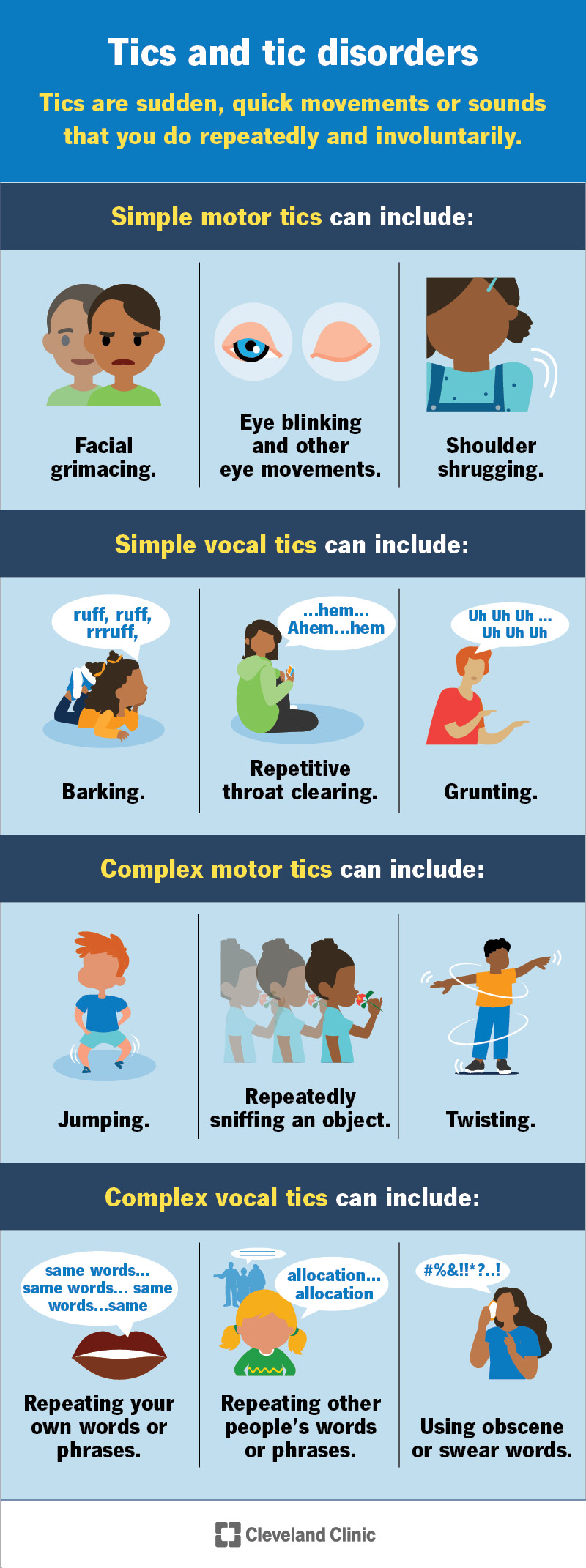
Credit: my.clevelandclinic.org
Diagnosis: How Are Eye Blinking Tics Identified?
Doctors usually diagnose tics through a careful history and physical exam. There are no blood tests or scans for tics, but these may be used to rule out other problems.
What To Expect During An Evaluation
- Medical history: The doctor will ask about when the blinking started, how often it happens, and if there are other tics or symptoms.
- Family history: Any relatives with tics or related conditions.
- Physical exam: To check for other eye or health problems.
- Observation: Watching the blinking pattern can help with diagnosis.
Rarely, tests like vision tests or brain scans are done if something else is suspected.
Treatment And Management Options
Most eye blinking tics are mild and do not need treatment. They often improve or go away on their own, especially in children. However, if tics are severe, last a long time, or cause problems in daily life, treatment may be helpful.
Behavioral Therapies
Behavioral therapy is often the first choice for treating tics.
- CBIT (Comprehensive Behavioral Intervention for Tics): This therapy teaches people to recognize tics and use other movements to block them. For example, when feeling the urge to blink, the person might focus on gently keeping the eyes open instead.
- Habit reversal training: A type of therapy that helps change the pattern of tics.
Behavioral therapy works best with a trained therapist and support from family or teachers.
Medications
Medicine is only used if tics are severe and disabling. Some common medicines include:
- Antipsychotics (like risperidone)
- Alpha agonists (like clonidine or guanfacine)
These medicines can help but may have side effects. They are usually used for short periods and require careful monitoring.
Other Approaches
- Botox injections: For severe eye blinking, small injections can relax the muscles and reduce tics.
- Relaxation techniques: Stress often makes tics worse. Activities like deep breathing, exercise, or hobbies can help.
- Education and support: Understanding tics helps reduce fear and embarrassment.
When To Consider Treatment
Treatment is needed if:
- Tics cause pain or injury
- School or work performance suffers
- Social life is affected
- Tics last over a year and do not improve

Credit: www.youtube.com
Home And School Strategies For Managing Eye Blinking Tics
Many people with tics do better when those around them understand and support them. Here are some practical strategies:
For Parents
- Stay calm: Reacting with worry or anger can make tics worse.
- Avoid punishment: Tics are not bad behavior.
- Don’t draw attention: Pointing out tics often increases them.
- Support relaxation: Help your child find ways to relax and unwind.
- Talk to teachers: Ask for understanding and simple classroom adjustments.
For Teachers
- Allow breaks if blinking gets tiring
- Seat the child where distractions are less
- Do not single out or punish for tics
- Give extra time for reading or writing if needed
For Adults With Tics
- Identify triggers: Notice if stress, fatigue, or certain situations make tics worse.
- Practice self-care: Sleep, healthy food, and exercise can help.
- Join support groups: Connecting with others who have tics can reduce feelings of isolation.
What Not To Do
- Don’t tell the person to “just stop” the tic—this rarely works and can increase stress.
- Don’t assume tics are done for attention or as a habit.
Common Myths And Misunderstandings
Many myths surround tics, which can cause confusion or stigma. Let’s clear up some common ones:
- Myth: Eye blinking tics are rare.
- Fact: Tics are common, especially in children.
- Myth: Tics always mean Tourette syndrome.
- Fact: Most tics are mild and do not become Tourette syndrome.
- Myth: Tics are a sign of emotional or mental problems.
- Fact: Tics are a movement disorder, not a sign of “bad behavior” or mental illness.
- Myth: People can easily control tics if they try hard enough.
- Fact: Tics can be briefly suppressed but often come back stronger later.
- Myth: Tics last forever.
- Fact: Most childhood tics improve or go away with time.
Data And Research Insights
Research on tics provides important insights for families and professionals. Below is a quick comparison of how tics appear in different age groups:
| Age Group | Chance of Having Tics | Typical Duration | Chance of Outgrowing |
|---|---|---|---|
| Children (5-12 years) | 15-20% | 1-12 months | High (80%) |
| Teens (13-18 years) | 5-10% | 1-3 years | Moderate (50%) |
| Adults | 1-2% | Varies | Low (20%) |
Another important question is how often tics occur compared to other eye problems:
| Condition | Age Most Affected | Frequency | Can Go Away Alone? |
|---|---|---|---|
| Eye blinking tic | Children (6-10) | Common | Often |
| Allergic conjunctivitis | All ages | Very common | With treatment |
| Dry eye | Adults | Common | Sometimes |
Two Non-obvious Insights About Eye Blinking Tics
- Suppressing tics is possible but exhausting. Many people with tics can hold them back for a short time, especially in public. But this takes a lot of effort and can make the urge to blink even stronger later. If a child’s tics disappear at school but are worse at home, it’s not because they are “faking”—it’s because home is where they feel safe to relax.
- Tics can change over time. Eye blinking tics may go away, but new tics can appear in other parts of the body (like sniffing or throat clearing). This is called “waxing and waning” and is a normal pattern, not a sign of something getting worse.
Real-life Example
Let’s meet Alex, a 9-year-old with an eye blinking tic. His parents first noticed the rapid blinking during homework time. At school, his teacher thought he was “acting up. ” After a visit to the doctor and some education about tics, Alex’s parents and teacher learned not to draw attention to the tic.
With time and support, Alex’s blinking became less frequent, and he felt more comfortable at school.
When To Seek Support From Specialists
If eye blinking tics are severe, last more than a year, or cause problems with learning or friendships, seeing a neurologist or a child psychiatrist can help. These specialists can guide advanced treatments and check for related conditions like ADHD or OCD, which sometimes occur with tics.

Credit: neupsykey.com
Supporting Someone With Eye Blinking Tics
Having support makes a big difference. Here’s how you can help:
- Be patient and understanding.
- Learn about tics together.
- Focus on the person, not the tic.
- Encourage hobbies and strengths.
- Find support groups for families and individuals.
For more detailed information, the Centers for Disease Control and Prevention has a helpful guide on tic disorders.
Frequently Asked Questions
What Causes Eye Blinking Tics In Children?
Most eye blinking tics in children are caused by a mix of genetic and brain chemical factors. Stress, excitement, or changes in routine can make them more noticeable. Tics often run in families, but having a tic does not mean a child is “nervous” or “acting out.”
Will My Child’s Eye Blinking Tic Go Away On Its Own?
In most cases, yes. Transient tics often disappear within a few months without treatment. Even chronic tics can improve as children grow older. Support, understanding, and avoiding stress can help.
Are Eye Blinking Tics A Sign Of Tourette Syndrome?
Not always. Eye blinking tics are common and usually mild. Tourette syndrome is diagnosed only when both motor and vocal tics are present for over a year. Most children with simple eye tics do not develop Tourette syndrome.
Can Stress Make Eye Blinking Tics Worse?
Yes, stress, anxiety, or excitement can make tics more frequent or noticeable. Relaxation, a calm environment, and support from family and teachers can help reduce tics.
What Should I Do If My Child Is Teased About Their Tic?
Talk openly with your child about tics and reassure them it’s not their fault. Work with teachers to prevent teasing and educate classmates if needed. Support groups can also help children feel less alone.
Conclusion
Eye blinking tics can be confusing and stressful, but with knowledge and support, most people learn to manage them well. Understanding, patience, and the right resources make a real difference in daily life.